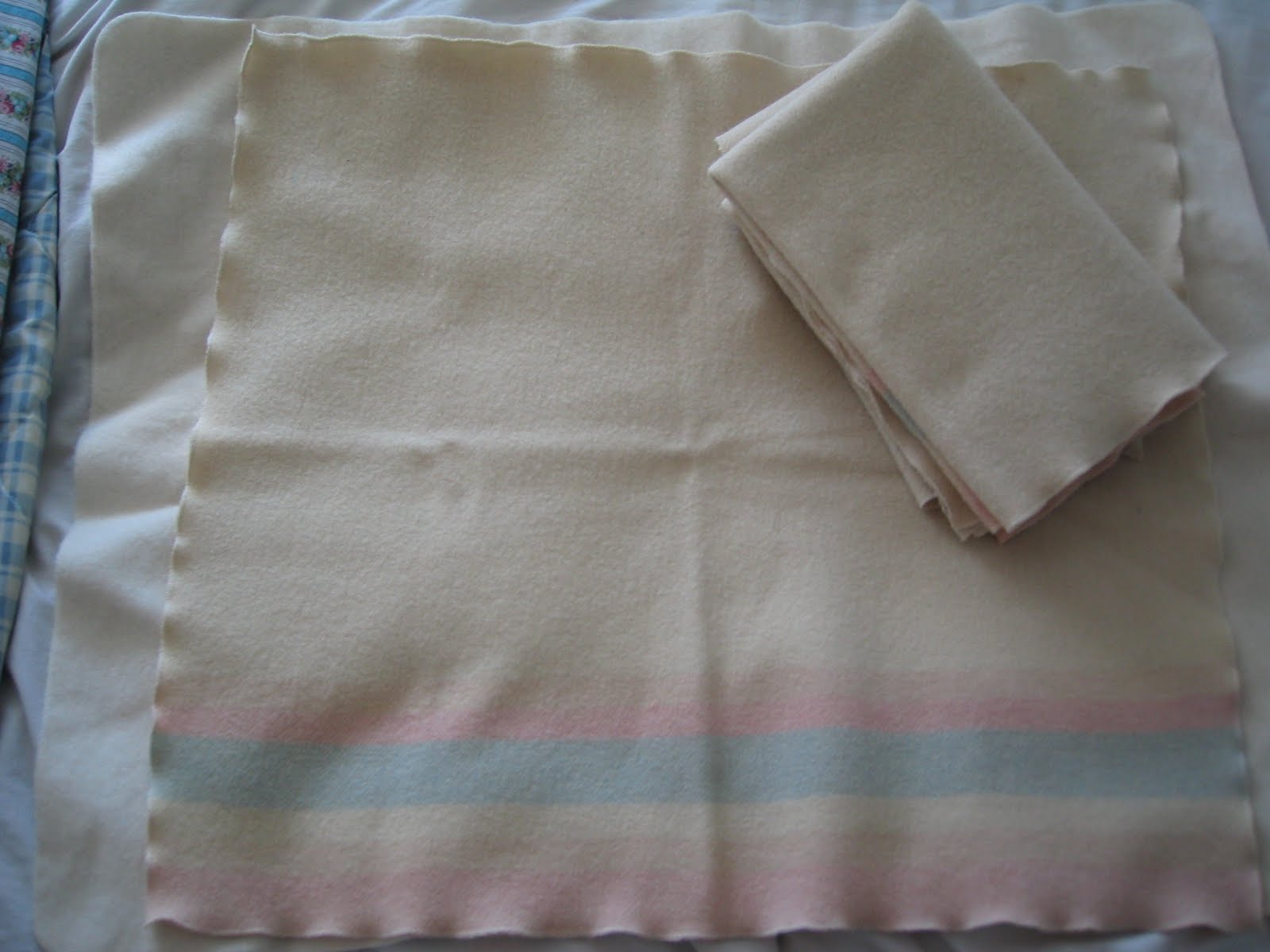
To protect it I use big thrifted wool blankets, which I just put down on top of the mattress under the fitted sheet, but considering how many accidents, leaks, and general wetness that accompanies newborns, I wanted something easily changed but still effective. We have two wool puddle pads that we got way back when we got the bed, when Safiya was still a babe, but they're now a little out of our price range (they were well worth the initial cost, though - over the years they've washed beautifully, stayed thick, cozy, and soft, and absorbed wetness and odour very well).
Showing posts with label fibre talk. Show all posts
Tuesday, 27 April 2010
Preparing for The Bump: Puddle Pads
To protect it I use big thrifted wool blankets, which I just put down on top of the mattress under the fitted sheet, but considering how many accidents, leaks, and general wetness that accompanies newborns, I wanted something easily changed but still effective. We have two wool puddle pads that we got way back when we got the bed, when Safiya was still a babe, but they're now a little out of our price range (they were well worth the initial cost, though - over the years they've washed beautifully, stayed thick, cozy, and soft, and absorbed wetness and odour very well).
Monday, 26 April 2010
What to Do With All Those Scraps?
As with any next generation, I went bigger and badder :-)
I choose to use mostly natural fabrics, which really wouldn't be a problem in the garbage since they would decompose pretty easily, but I use thrifted polyester-cotton thread and fabric some, and the idea of my craft resulting in bits of plastic sitting around forever and making their way into the food chain makes me shudder too much to sew a straight seam, so I've been collecting it (while trying to get away from the whole polyester thing in the first place). But what to do with all those scraps?
My pregnant self tried to take a nap outside the other day, and was quickly and uncomfortably made aware of the dearth of outside cushions in this house.
So, Safiya and I sewed up a giant cushion from cotton canvas that I had, and stuffed away!
Thursday, 15 May 2008
Should've Been a Pirate...
...or an archeologist (there's no pillaging if you're an archeologist, right?)
The hunt is good. It gives an adrenaline rush (ha! sky-diving and bungee-jumping have nothing on....thrifting!), and it's useful. Well, usually :-) The nice thing about houses is that they are a finite space (except when you're cleaning - how does that work?), which usually puts a limit on the things I bring home. So, no more furniture or dishes or things like that. However, I have a feeling I created the business part of girl number twenty to enable myself to bring home more fabric (shhhhh, don't tell Mr. S). Ahem. I'm not going to explore that idea any further. Just to be clear, it's not just an addiction; we can live in the middle in Toronto on one income for various reasons, no car, cook food at home, socialized healthcare, and most of our clothes, etc. are second-hand.
My attempts at justification aside, I especially have a soft spot for anything well-made and wool. Look what I found! The first clue at the goodness within was: good quality cotton cover (polyester tends to cover polyester):
I furtively opened a few stitches at the Value Village and saw within: good quality cotton flannel. Ooooo. It came home with me. Besides which, it seemed too heavy to be filled with polyester. Once home, the reveal:


Eeeep! Wool! Look at the pencil-marks. Someone worked hard on this:


Thank you to whoever made this (and whoever donated it). On our bed now is a lovely wool-filled-duvet-mattress-thingy. We're sleeping on it, and it's heaven.
And how much does heaven cost? $7.99.
The hunt is good. It gives an adrenaline rush (ha! sky-diving and bungee-jumping have nothing on....thrifting!), and it's useful. Well, usually :-) The nice thing about houses is that they are a finite space (except when you're cleaning - how does that work?), which usually puts a limit on the things I bring home. So, no more furniture or dishes or things like that. However, I have a feeling I created the business part of girl number twenty to enable myself to bring home more fabric (shhhhh, don't tell Mr. S). Ahem. I'm not going to explore that idea any further. Just to be clear, it's not just an addiction; we can live in the middle in Toronto on one income for various reasons, no car, cook food at home, socialized healthcare, and most of our clothes, etc. are second-hand.
My attempts at justification aside, I especially have a soft spot for anything well-made and wool. Look what I found! The first clue at the goodness within was: good quality cotton cover (polyester tends to cover polyester):
I furtively opened a few stitches at the Value Village and saw within: good quality cotton flannel. Ooooo. It came home with me. Besides which, it seemed too heavy to be filled with polyester. Once home, the reveal:

Eeeep! Wool! Look at the pencil-marks. Someone worked hard on this:


Thank you to whoever made this (and whoever donated it). On our bed now is a lovely wool-filled-duvet-mattress-thingy. We're sleeping on it, and it's heaven.
And how much does heaven cost? $7.99.
Friday, 19 October 2007
There Should be a Pun About Fish and Doilies...
O.k., have you ever seen crocheted fish before?

I've never seen anything like them, and I love them. Besides the stack of clothes, my Father-in-law's friend also gave me these and some other doilies that she crocheted. It's meticulous work, and I love the fish because they echo my sentiments on doilies. Doilies are useless. Pretty, but useless. Thus, fish doilies are perfect - could you possibly use them as anything? Nope!

I've never seen anything like them, and I love them. Besides the stack of clothes, my Father-in-law's friend also gave me these and some other doilies that she crocheted. It's meticulous work, and I love the fish because they echo my sentiments on doilies. Doilies are useless. Pretty, but useless. Thus, fish doilies are perfect - could you possibly use them as anything? Nope!
Sunday, 16 September 2007
These Fingers Were Built for Googling...
I have yet to get my hands on some hemp, and I don't have enough room in our yard to grow some (although I've got a lovely stinging nettle in the back somewhere...)
There are many organisations out there with good summeries and articles of interest regarding hemp. Just go for a Google-walk. But make sure you remember to come back.....I mean, sometimes it never ends, does it?
Last year at the International Straw Bale Building Conference (we had to go, I mean, how often does Canada get to host that, and practically in our backyard? Obviously it was worth dragging Safiya, who was 2, out camping in October......actually, it really was worth it - it was wonderful. But I digress.....) I had the opportunity to hold (o.k., fondle) some hemp felt. It was lovely, thick stuff, and craft projects whizzed through my head as I stood there. The farmer had started up a couple of years ago, and was still experimenting with the processing. When I mentioned making fabric, he reacted as if I'd asked to go to the moon. There was no capacity and no interest, he said.
So, we can grow it (well!) and we can cut it, but getting from A to C?
First, capacity. It seems that the only mill in Canada that was trying to process hemp for fibre, Fibrex Quebec, is no longer around. The Canadian National Resource Council seems to have entered into a partnership with Hemptown Clothing to manufacture hemp fabric, but I haven't found where the actual mill is...yet.
The fun part of it is that growing hemp in Canada is actually regulated by Health Canada, under the auspices of the Controlled Drugs and Substances Act, so I imagine that things are a little bit more complicated than for the average farmer, eh? (Here's a good primer on growing industrial hemp in Ontario, just in case you get a hankering for a new endeavour, you know, in your spare time....)
Those politics waaaay aside, what about interest? What about demand? And here my links fail me. Is this where we as crafters, independent designers, artists, can get things rolling? (No pun intended! There's no THC in hemp :-) We want consumers to support local talent, local designers, which is fantastic. When will it be important enough to us that most of the raw materials that we use come locally made and only a few exotics, such as cotton (ha!), are available at a premium? Granted, you cannot produce fabric on principle alone. It has to be of good quality, or no one will buy it. I think it would be slightly terrifying to be the first to try to mill hemp fabric in Canada (risk! cost! both things I'm not very good at). And I'll freely admit that one of the reasons that I personally use recycled goods is cost.
However, I'm on the brink. When my polyester thread runs out, I think I'll switch to organic cotton (Locally produced machine-ready thread? Whoah.....one step at a time here). When my stash of white cotton and linen runs out? If I can't find second-hand, it might be fun to order some hemp. I just wish it were from my backyard. Sometimes the view from the brink looks a bit bleak, sometimes it looks hopeful.
Hopefully this teeter-totter lands somewhere soft.....like a pile of hemp.
There are many organisations out there with good summeries and articles of interest regarding hemp. Just go for a Google-walk. But make sure you remember to come back.....I mean, sometimes it never ends, does it?
Last year at the International Straw Bale Building Conference (we had to go, I mean, how often does Canada get to host that, and practically in our backyard? Obviously it was worth dragging Safiya, who was 2, out camping in October......actually, it really was worth it - it was wonderful. But I digress.....) I had the opportunity to hold (o.k., fondle) some hemp felt. It was lovely, thick stuff, and craft projects whizzed through my head as I stood there. The farmer had started up a couple of years ago, and was still experimenting with the processing. When I mentioned making fabric, he reacted as if I'd asked to go to the moon. There was no capacity and no interest, he said.
So, we can grow it (well!) and we can cut it, but getting from A to C?
First, capacity. It seems that the only mill in Canada that was trying to process hemp for fibre, Fibrex Quebec, is no longer around. The Canadian National Resource Council seems to have entered into a partnership with Hemptown Clothing to manufacture hemp fabric, but I haven't found where the actual mill is...yet.
The fun part of it is that growing hemp in Canada is actually regulated by Health Canada, under the auspices of the Controlled Drugs and Substances Act, so I imagine that things are a little bit more complicated than for the average farmer, eh? (Here's a good primer on growing industrial hemp in Ontario, just in case you get a hankering for a new endeavour, you know, in your spare time....)
Those politics waaaay aside, what about interest? What about demand? And here my links fail me. Is this where we as crafters, independent designers, artists, can get things rolling? (No pun intended! There's no THC in hemp :-) We want consumers to support local talent, local designers, which is fantastic. When will it be important enough to us that most of the raw materials that we use come locally made and only a few exotics, such as cotton (ha!), are available at a premium? Granted, you cannot produce fabric on principle alone. It has to be of good quality, or no one will buy it. I think it would be slightly terrifying to be the first to try to mill hemp fabric in Canada (risk! cost! both things I'm not very good at). And I'll freely admit that one of the reasons that I personally use recycled goods is cost.
However, I'm on the brink. When my polyester thread runs out, I think I'll switch to organic cotton (Locally produced machine-ready thread? Whoah.....one step at a time here). When my stash of white cotton and linen runs out? If I can't find second-hand, it might be fun to order some hemp. I just wish it were from my backyard. Sometimes the view from the brink looks a bit bleak, sometimes it looks hopeful.
Hopefully this teeter-totter lands somewhere soft.....like a pile of hemp.
This is Not Hemp
On our way home from camping, we stopped in at the Rose Haven Farm Store. The owner, Linda Swaine, was at a trade show and had thus taken all her best locally made, naturally dyed wool with her, and all her hemp, much to my dismay. But I did find this:

For me, this is practically the holy grail of my nascent fiber journey. When I was a girl, I read the fairy tale The Wild Swans over and over again and marvelled at making cloth from a weed. That fascination suddenly came back to me as I was meandering through the All Fiber Arts Library a while back and found some articles on stinging nettle. And then this! Poor Mr. S. had to endure a two-hour drive back to Toronto, me babbling on about textiles and mills and he with no escape.
Now that it's in my eager hands, I'm not sure what to do with it. It's fairly friable, and smells a bit of coal-tar (I wonder how they processed it?). While I was in the shop, I had a good chat with the lovely, very knowledgeable woman who was minding the shop about wool and local goods and mills and production. The end point being that if a small farmer wants their wool processed without the usual chemicals, the mill charges a premium for doing this "special order" separately, thus driving up the price of the end product and making it hard for the organic or "natural" farmer to make a living as people are generally not yet ready to pay the price for such yarn.
This seems to be the case for so many things. Chemicals are subsidized, the conventional ways are ingrained, oil is still cheap and so local markets are saturated with cheaply made, massed produced items. Holding hands with these obstacles is the lack of a deeply rooted fibre industry in Canada, such as linen in France or silk in China. I am unfortunately not familiar with First Nations' fibre history, and the rest of us are a couple generations' of immigrants, each bringing with them different fibre traditions.
Wouldn't it be lovely? A dirt-to-fabric source of pride? Wool we can do, and there are still wool mills in Canada, but mostly not in Ontario. (Although I did find Belle Vallee Wools, for example - and it seems they're doing it the old ways...) We don't have the climate for flax and linen except in Quebec. Cotton's right out. So....nettle and hemp, anybody?
Oh yes, hemp.....

For me, this is practically the holy grail of my nascent fiber journey. When I was a girl, I read the fairy tale The Wild Swans over and over again and marvelled at making cloth from a weed. That fascination suddenly came back to me as I was meandering through the All Fiber Arts Library a while back and found some articles on stinging nettle. And then this! Poor Mr. S. had to endure a two-hour drive back to Toronto, me babbling on about textiles and mills and he with no escape.
Now that it's in my eager hands, I'm not sure what to do with it. It's fairly friable, and smells a bit of coal-tar (I wonder how they processed it?). While I was in the shop, I had a good chat with the lovely, very knowledgeable woman who was minding the shop about wool and local goods and mills and production. The end point being that if a small farmer wants their wool processed without the usual chemicals, the mill charges a premium for doing this "special order" separately, thus driving up the price of the end product and making it hard for the organic or "natural" farmer to make a living as people are generally not yet ready to pay the price for such yarn.
This seems to be the case for so many things. Chemicals are subsidized, the conventional ways are ingrained, oil is still cheap and so local markets are saturated with cheaply made, massed produced items. Holding hands with these obstacles is the lack of a deeply rooted fibre industry in Canada, such as linen in France or silk in China. I am unfortunately not familiar with First Nations' fibre history, and the rest of us are a couple generations' of immigrants, each bringing with them different fibre traditions.
Wouldn't it be lovely? A dirt-to-fabric source of pride? Wool we can do, and there are still wool mills in Canada, but mostly not in Ontario. (Although I did find Belle Vallee Wools, for example - and it seems they're doing it the old ways...) We don't have the climate for flax and linen except in Quebec. Cotton's right out. So....nettle and hemp, anybody?
Oh yes, hemp.....
Saturday, 26 May 2007
Humbled by Thread
Oh, the Textile Museum of Canada! Their annual yardage sale is something that I've always wanted to go to, and having never been to the museum either (!), I was more than happy to drag Safiya and Mr. S. downtown this morning. (psssst they both had a great time at the museum!)
We arrived a bit late in the game, so the fabric was already well-picked over, but I did score some trim and tapestry wool and more trim (which I think I got mostly for the package labels, but do you see the giant orange rick-rack? everybody needs giant orange rick-rack!):

And these patterns, the first one of which I harbour no illusions about wearing as depicted in the cute illustration because on me, with my legs, instead of "summer picnic" you'd be thinking "why is that tree-stump wearing an apron?"
But I do love it and I may have to make it to wear over jeans or something. And then there's these:

which are also too cute, but vaguely unsettling as the top left baby in both pictures looks to be under some sort of impending doom....
All frivolity aside, when I finally ventured into the museum itself, I was awestruck by the exhibition colour and light: embroidery from India and Pakistan. Granted, I have not seen a lot of textile exhibits, but this one struck me as so rich; the beauty and workmanship and ownership and depth of what is hung on those walls is wonderful to behold, and what a privilege to have seen it. Seeing works of art such as those is so humbling. The tiny amount of work that I put into my little stitches on fabric is something else entirely, which is o.k. too, because those same works are also inspiring in seeing the beauty that is possible in human hands. It's set me reflecting on art and craft again, and especially on craft heritage.
I'll be going back....(it's on until July 8 - if you're in town, go and take it in, because the website, while wonderful, does not do it justice....)
We arrived a bit late in the game, so the fabric was already well-picked over, but I did score some trim and tapestry wool and more trim (which I think I got mostly for the package labels, but do you see the giant orange rick-rack? everybody needs giant orange rick-rack!):

And these patterns, the first one of which I harbour no illusions about wearing as depicted in the cute illustration because on me, with my legs, instead of "summer picnic" you'd be thinking "why is that tree-stump wearing an apron?"
But I do love it and I may have to make it to wear over jeans or something. And then there's these:
which are also too cute, but vaguely unsettling as the top left baby in both pictures looks to be under some sort of impending doom....
All frivolity aside, when I finally ventured into the museum itself, I was awestruck by the exhibition colour and light: embroidery from India and Pakistan. Granted, I have not seen a lot of textile exhibits, but this one struck me as so rich; the beauty and workmanship and ownership and depth of what is hung on those walls is wonderful to behold, and what a privilege to have seen it. Seeing works of art such as those is so humbling. The tiny amount of work that I put into my little stitches on fabric is something else entirely, which is o.k. too, because those same works are also inspiring in seeing the beauty that is possible in human hands. It's set me reflecting on art and craft again, and especially on craft heritage.
I'll be going back....(it's on until July 8 - if you're in town, go and take it in, because the website, while wonderful, does not do it justice....)
Subscribe to:
Posts (Atom)